Blockhide: A Bold, Authentic Sans Serif Font for Makers
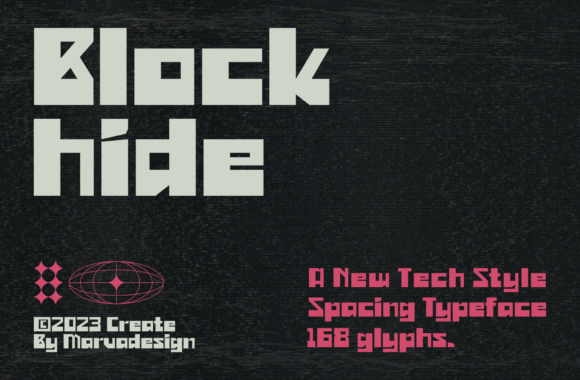
If you’ve ever spent hours tweaking letter spacing on a candle label only to find it looks weak at 12pt—or struggled to get your farmhouse sign to feel both modern and grounded—then Blockhide is the sans serif font that finally clicks. It’s not just another clean typeface. Blockhide is a bold, authentic display font built for real craft work: physical products you cut, print, stitch, glue, or sell. As someone who designs printable planners, hand-presses boutique tags, and cuts vinyl for local boutiques, I reached for Blockhide the moment I saw its weight and rhythm—and haven’t swapped it out since.
Visually, Blockhide balances strength with warmth. Its uppercase letters have confident, slightly squared terminals and generous x-height—so even small sticker text stays legible on a mason jar lid or gift tag. Lowercase characters carry subtle personality without sacrificing clarity: no exaggerated quirks, no forced “handmade” flourishes that break in Cricut Design Space or Silhouette Studio. It reads as human-made, not algorithmically smoothed. That authenticity matters when customers hold your product—the font quietly signals care, intention, and quality.
For physical product use, Blockhide shines where impact meets practicality. Think: candle labels (especially soy wax brands aiming for minimalist-luxe), wedding welcome boards (it holds up beautifully painted on wood or printed on matte cardstock), seasonal greeting cards (its boldness carries through foil stamping), and SVG-based t-shirt designs (clean vector paths mean crisp cuts every time). I used it last month for a set of lavender-scented soap labels—printed on kraft paper, die-cut with rounded corners—and customers specifically mentioned how “solid” and “trustworthy” the typography felt.
It’s also ideal for digital printables and planner inserts. Because Blockhide’s spacing is tight but never cramped, it works well in grid-based layouts—even at 10pt for habit trackers or weekly headers. Unlike many display fonts, it doesn’t collapse or blur in PDF previews or low-res mockups, which saves time when prepping Etsy listings or client proofs.
Readability at small sizes is where Blockhide stands apart from trendier alternatives. At 8–10pt, it remains fully legible on product tags, tea box labels, or mini stickers—no squinting, no kerning panic. For cutting machines, its open counters and consistent stroke width prevent “bridging” issues in vinyl or heat transfer material. And yes—it’s been tested at 1/4" height on a Silhouette Cameo 4 with zero dropouts.
Blockhide pairs intuitively with other design assets. Try it with a relaxed script font for wedding invitations (think “Emma & James” in Blockhide, followed by “Celebrating Love” in a soft handwritten style). Or layer it over a warm serif font for boutique packaging—Blockhide for the brand name, a gentle serif for ingredients or origin notes. It also grounds playful handwritten fonts in digital templates: use Blockhide for section headers in a printable meal planner, then switch to a casual script for recipe titles. No clashing. Just clear visual hierarchy.
This is a modern sans serif font designed for makers—not just web designers or logo studios. It includes standard OpenType features like stylistic alternates and ligatures (great for avoiding awkward letter collisions in words like “offering” or “coffee”), plus full multilingual support covering Western European languages. File formats include OTF and TTF, so whether you’re in Canva, Affinity Designer, or Adobe Illustrator, it loads cleanly and renders reliably.
One thing I always check before committing to a new font: licensing. Blockhide is a commercial font, meaning you can use it across your entire product workflow—on physical goods (mugs, tote bags, signs), digital downloads (PDFs, PNGs, SVG files), client projects, and even resale templates—as long as your license covers those uses. No hidden restrictions for Etsy sellers or small-batch producers. That peace of mind? Priceless when you’re scaling your shop and don’t want to reformat 200+ listings because a font license changed.
In everyday making, Blockhide does more than look good—it solves problems. It replaces the need to manually thicken strokes in Illustrator. It eliminates the “too thin” or “too trendy” dilemma when designing for multi-generational audiences (yes, my 72-year-old neighbor noticed how easy the birthday invitation was to read). It gives consistency across your brand: same font on your Instagram story banner, your printable wall art, and the chalkboard-style sign hanging at your farmers’ market stall.
I’ve used Blockhide for holiday product packaging—crisp red-and-kraft boxes with “Hand-Poured • Small Batch” in Blockhide—and for delicate baby shower invites where its boldness was softened with ample white space and linen-textured paper. It adapts without losing identity. That’s rare in a display font.
Whether you're sketching ideas in a notebook, prepping files for DTG printing, or fine-tuning an SVG for a Glowforge project, Blockhide behaves predictably. It’s not flashy for flashiness’ sake. It’s bold where it needs to be, quiet where it should recede, and always legible—on screen, on paper, and in the hands of your customers.
If your current sans serif font feels like background noise instead of a brand voice—if your product labels lack presence or your digital templates blend in instead of standing out—Blockhide isn’t just another font. It’s the typographic foundation your handmade business has been waiting for.